
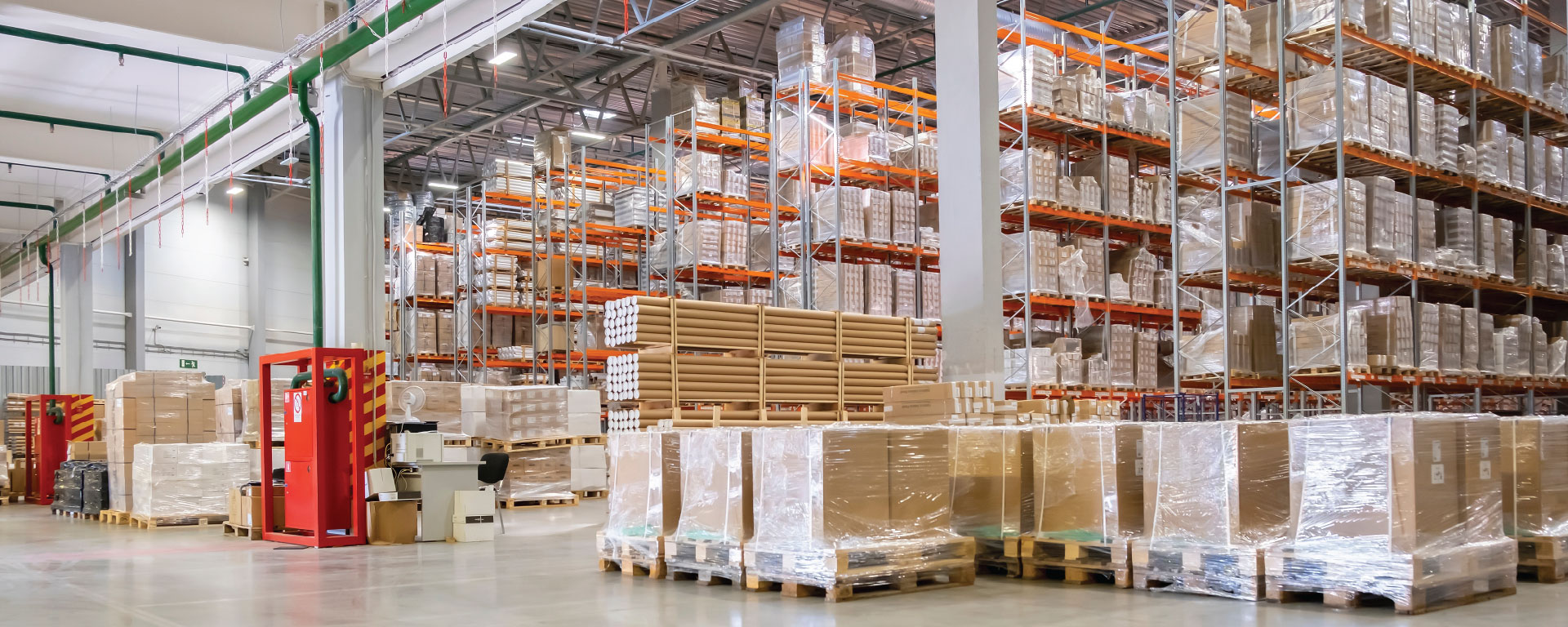
Mumbai’s real estate market is both expensive and competitive, and hence building or leasing a warehouse in Mumbai can drain your budget. Developers, operators and brand supply chains who are running a business in this city face mainly two challenges: limited ground area and huge acquisition and lease costs. Here are some practical, research-backed warehousing design strategies you can implement when it comes to designing a cost-effective warehouse in Mumbai.
1- Go for multi-level warehouses
Horizontal land in Mumbai is quite expensive, so verticality is the most effective countermeasure against excessive cost if you are building or leasing a warehouse in Mumbai. You can implement design strategies like multi-storey and mezzanine systems in your warehouse in Mumbai to multiply usable floor area on the same plot. In India, urban multi-level warehouses are growing as a model to minimize land acquisition costs while maintaining a short gap to demand centres. This facilitates last-mile speed without paying the heavy premium price for sprawling ground plots. Some additional design tips you can follow while designing a warehouse in Mumbai are planning for heavier structural loads, high-capacity goods elevators, fire egress on every level and racking systems designed for vertical pick or putaway.
2- Use automation strategically — ASRS & mezzanine automation
Automated storage and retrieval systems (ASRS) or semi-automated lifts for mezzanines are a perfect fit for high-density vertical storage pairs when it comes to designing a warehouse in Mumbai. While automation requires upfront capex, the space-saving it delivers and the labour efficiency it unlocks produce a faster ROI in expensive markets than in low-cost land markets. Prioritize automation for fast-moving SKUs and pick-intensive zones when it comes to building a warehouse in Mumbai. Ensure that the slow movers are kept on conventional racking to balance the costs.
3- Design a laser-efficient layout: flow beats square footage
In a place like Mumbai, where every square metre is expensive, internal layout decisions become critical. While designing a warehouse in Mumbai, you can easily reduce transit time by zoning by velocity, using narrow but safe picking aisles, and clustering value-added operations such as kitting, returns processing, etc, to minimize unnecessary handling. Proven layout principles such as receiving, staging, storage, packing, and shipping can be arranged to minimize crisscrossing. Even the smallest footprint gains compound quickly in Mumbai’s cost environment.
4- Explore micro-fulfilment and dark stores for the last-mile
Micro-fulfilment centres (MFCs) and dark stores are cost-effective alternatives to large suburban warehouses in Mumbai for both retailers and grocers who mainly serve dense urban areas. MFCs are small, tech-driven facilities located inside or near the city that significantly reduce delivery time and fleet cost per parcel. They also reduce the need for a large centralized inventory close to the city, and allow a hybrid mode that optimizes land use and service levels.
5- Consider flexible real-estate solutions: lease, shared parks, brownfield conversion
Consider build-to-suit leases, co-warehousing operators, multi-tenant logistics parks, or repurposing brownfield sites for building or leasing a warehouse in Mumbai if buying land in Mumbai is not cost-effective for your business. Shared logistics parks and co-warehousing reduce capital lock-up and provide scale benefits that are otherwise costly to duplicate in tight urban plots. Industry reports indicate that developers and large logistics companies increasingly favour these hybrid models in India’s primary markets.
6- Design for flexible stacking and modularity
Going for modular systems while designing a warehouse in Mumbai can allow you to increase density when volumes rise and scale back where there needs to be a shift in labour or access needs. It is essential in a market like Mumbai’s, where expansion by acquisition can exceed your budget. Prefabricated steel mezzanines and modular buildings can also shorten fit-out time and reduce on-site civil costs.
7- Optimize building services — energy, water, and rooftop real estate
High utility costs and the humid climate of Mumbai make efficient MEP design for warehouses in Mumbai non-negotiable. You can install rooftop solar, LED lighting with occupancy sensors, and energy-efficient HVAC for packing or cold-chain pockets in your warehouse in Mumbai. Rooftop warehouses can host solar PV and even light industrial functions as a smart way to monetise vertical assets in an expensive footprint.
8- Plan loading and truck movement tightly
In a city like Mumbai, constrained street frontage demands careful dock planning. Use scheduled appointment systems, off-peak deliveries, and smaller urban delivery vehicles to avoid costly queuing while planning the design for any warehouse in Mumbai. Wherever possible, design multiple internal docks with dedicated inbound/outbound lanes and safe pedestrian paths to preserve throughput even on narrow city plots.
9- Start with a pilot, measure, scale
If you’re testing multi-level, automation, or micro-fulfilment approaches to your warehouse in Mumbai, pilot them in a smaller facility or a single zone. Measuring key KPIs (throughput per sq. m, order-cycle time, cost per order) and Mumbai’s cost regime can lead to incremental performance improvements and an outsized impact on margins.
In a city like Mumbai, where land is priced at premium charges, design intelligence can be your biggest advantage. TransIndia can help businesses further optimize their costs while looking for a warehouse in Mumbai.